Aging begins in the cell: why absorption is more important than supplements
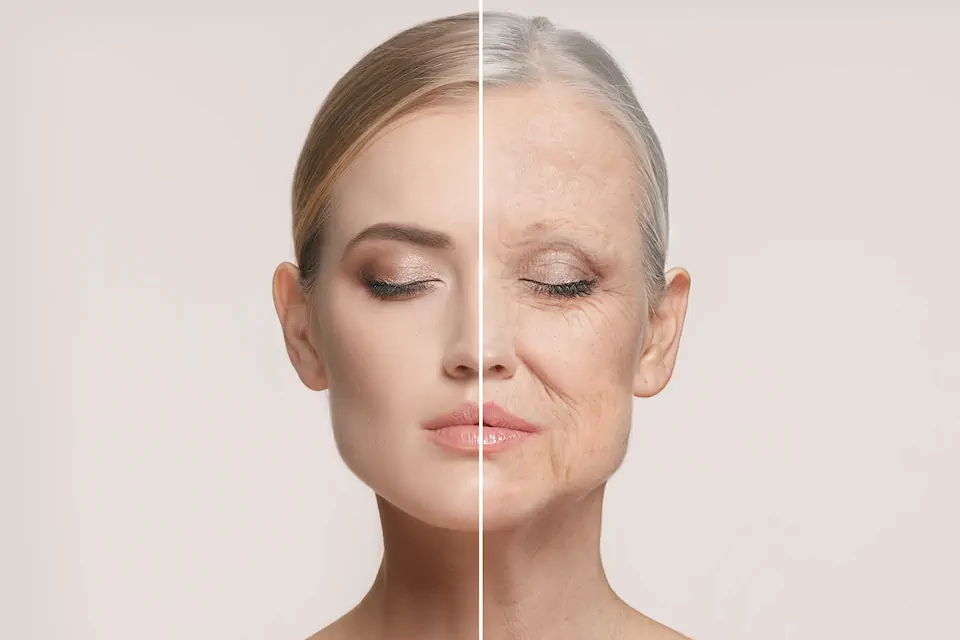
As we age, cells absorb fewer minerals, and that determines more of the aging process than we long thought
A striking article appeared on Scientias in recent weeks. Researchers from the German Center for Neurodegenerative Diseases (DZNE) reached a conclusion that shakes the foundations of current anti-aging research. Their message was sharp: “Longevity treatments do not slow aging.”
In other words: many treatments that extend the lifespan of mice do not do so because the animals age more slowly, but simply because one disease—usually cancer—strikes later. The aging process itself continues unabated. This means that a large part of what we call “anti-aging” does not measure what it claims to measure at all. And that automatically raises the question: where should we look if we really want to understand aging?
Aging is not a countdown clock, but biology in flux
We know the classic hallmarks: DNA damage, chronic inflammation, mitochondria producing less energy, impaired protein quality, and cells lingering in a kind of senescent state. These are not the starting points of decay, but the endpoints. The consequences.
The crucial question then becomes: what drives these processes?
There are three underlying mechanisms that form the foundation of every cell:
• intracellular mineral uptake. Do minerals even reach the cell?
• redox balance. The equilibrium between damage and repair
• detoxification capacity. The cell's ability to clear out toxins
All of the cell's crucial recovery processes—DNA repair, energy production, antioxidant enzymes (such as SOD1 and GPX), and detoxification mechanisms—are entirely dependent on minerals actually entering the cell.
Transport proteins that regulate this influx, such as ZIP/ZnT (zinc), TRPM7 (magnesium), and DMT1 (iron), function measurably worse as we age. As a result, intracellular mineral levels drop even with sufficient nutrition or supplementation. This relationship has been extensively described in Nature, Cell, Aging Research Reviews, Nutrients, and other leading journals. In short: uptake is not a detail, but the biochemical prerequisite for virtually all hallmarks of aging. These three determine how well a cell functions even before damage or disease occurs. Minerals are not a detail here, but the basis of almost every biochemical function. Science is crystal clear on this: without intracellular minerals, a cell cannot repair DNA, produce energy, activate antioxidants, control inflammatory responses, or allow enzymes to function.
But—and this is the blind spot of the entire anti-aging field—minerals only work if they get inside the cell.
Nutrition means little without absorption. Supplements mean little without absorption.
The most interesting example is antioxidants. Not the vitamin pills, but the cell's internal cleaning crews: enzymes like SOD1 and GPX.
You can think of SOD1 as a fire hose inside the cell. It extinguishes aggressive oxygen particles, but only works if the cell contains enough zinc and copper . Without those minerals, nothing happens.
GPX is another cleaner. It neutralizes dangerous peroxide substances, but only runs on selenium, and many people don't get enough of that.
Together, they form your cells' internal cleaning service. A selenium deficiency weakens the antioxidant GPX.
Cells become less effective at clearing out toxins. The result? More oxidative damage, faster aging, and a higher risk of cardiovascular disease. And because nearly half of all older adults have a selenium deficiency without knowing it, this becomes a silent accelerator, a silent accelerator happening right in front of us without us even realizing it.
Researchers therefore call these processes 'upstream determinants of aging'—mechanisms that occur before visible damage, but are rarely investigated because they are difficult to measure.
And that brings us to the question that is almost never asked. Not: what are you taking? But: can your cell actually use it?
Minerals don't work in your blood. Not in your gut. Not in your supplements.
They only work once they get inside the cell. Only then do they act as the plugs for every repair system:
no absorption → no DNA repair
no absorption → no detox
no absorption → no mitochondrial energy
no absorption → no immune regulation
The harsh reality
① Absorption decreases with age
As we age, the structure of the intestinal wall changes. Permeability increases, but active absorption capacity decreases: the pumps responsible for pulling minerals in work less efficiently.
The result? You can keep taking the same supplements but achieve less. In other words: the supply remains the same, but the gatekeepers are slowing down.
② Transporters become less responsive
Transporters, also known as transport proteins, are the cell's molecular loading docks. They determine which minerals are allowed in and which must stay out. With age, their sensitivity and regulatory power decline: the cell sends a signal ("we need magnesium"), but the transporter reacts less sharply. The result: the right minerals are left at a closed door.
③ Detox systems slow down
Every cell runs a small waste-processing system: enzymes that neutralize toxins, scavenge oxidants, and clean up damaged molecules.
With age, the following decline: the amount of enzymes, the speed at which they work, and the availability of the minerals they require (such as selenium, copper, manganese, and zinc). The consequence: waste accumulates faster than it is removed. And that accelerates aging.
④ Mitochondria lose their grip on minerals
Mitochondria are not just batteries; they are complex systems that are continuously dependent on magnesium, iron, copper, and manganese. These minerals keep the electron transport chain stable. With age, something subtle but crucial happens: membranes become stiffer, transport channels become less efficient, and mineral buffering (maintaining a reserve) decreases. As a result, mitochondria struggle to hold onto what they need to produce energy. It is as if a factory is still running, but has fewer and fewer raw materials in stock. Energy production doesn't collapse all at once; it gradually fades away.
But that is precisely what is rarely measured.
Which is why the core of aging often remains out of sight, even though that is where it begins.
The best cleaner cannot work without tools
If absorption stalls, the entire line of defense grinds to a halt and aging accelerates. Detox processes are just as dependent on minerals.
Enzymes such as GST, GPX, and catalase clear away toxins that accumulate over the years, such as cadmium, lead, and arsenic.
However, when cellular mineral levels are low, this system slows down, cellular stress increases, and aging accelerates.
And this is exactly the core of the issue: mineral absorption changes with age.
Transport proteins that determine how many minerals a cell lets in – such as ZIP and ZnT for zinc, TRPM7 for magnesium and DMT1 for iron – become less efficient as we get older.
Mitochondria also absorb minerals less effectively. When absorption is low, cells exhibit stress responses, and that stress triggers almost all the hallmarks of aging. This has been extensively confirmed in research in Nature, Cell, Springer, Nutrients, and many other leading journals. The conclusion is unapologetically simple: absorption drops, functionality drops, aging accelerates.
Yet we invest billions in other anti-aging avenues
Rapamycin, a drug that suppresses the immune system and has extended lifespan in some animal studies. Metformin, which is being studied for its potential effects on aging. NAD boosters, supplements that increase a substance cells use to generate energy.
All interesting. But almost no one asks the most logical, most fundamental question: is the cell actually getting what it needs to repair itself? And yet, absorption is barely studied. Not because it is unimportant – quite the contrary – but because what happens inside the cell is technically the most difficult to measure. Scientists measure what is measurable: blood, diet, lifespan. But what is truly decisive takes place on a micrometer scale within a moving, living cell. It is fragile, expensive, and complex. And because of that, it has been ignored for years.
But that makes the difference between "I am aging" and "my cells aren't getting what they need" more than just a nuance. It is a completely different perspective on health.
We are not claiming that aging starts entirely with cellular absorption. That would be too simple.
But you can say, with full scientific backing: no cellular repair process works without intracellular minerals
• not DNA repair • not energy production • not antioxidant activity • not detoxification processes • not immune regulation
Minerals only work intracellularly. Without absorption, nothing happens biochemically.
Because absorption demonstrably changes with age, it is impossible to understand aging without examining this process. Therefore, mineral absorption is not a hypothesis, but a prerequisite.
The fact that this is barely being researched highlights how skewed current anti-aging science has become. It is not just desirable, but essential, for aging research to shift its focus toward cellular uptake, transporters, and mineral homeostasis. Not because it is a theory, but because biochemistry allows for no other direction.
It is time to stop looking only at the roof and start looking at the foundation.
Because that is where the story of aging begins, and perhaps the solution as well. We now know that aging often accelerates not because of what you are missing, but because of what your cells are no longer absorbing. This is the blind spot in almost every anti-aging approach. You can eat healthily, take supplements, and do everything "right," but if the cell doesn't open the door, very little happens.
Take the Absorption Test
Want to know where you stand with your absorption capacity?
👉 Take the absorption check and discover the state of your cellular health.
Read more: https://www.smpl.international/post/fulvinezuur-het-onzichtbare-transportsysteem-dat-klassieke-mineralensupplementen-missen
SOURCES:
https://pubmed.ncbi.nlm.nih.gov/35840801
https://www.dzne.de/en/news/press-releases/press/longevity-treatments-do-not-slow-aging
https://doi.org/10.3390/nu70103019
https://doi.org/10.1136/jcp.2009.072785
https://doi.org/10.1016/j.cell.2016.03.005
https://doi.org/10.1016/j.cell.2023.05.003
https://doi.org/10.1016/j.biocel.2007.01.005
https://doi.org/10.1038/35041687
https://doi.org/10.3390/toxics3030448
https://doi.org/10.1289/EHP1089
https://doi.org/10.1093/jn/136.6.1481
https://doi.org/10.3390/nu12061608
https://doi.org/10.1016/j.arr.2019.100996
https://www.nature.com/articles/s41392-023-01679-y
https://www.cell.com/developmental-cell/abstract/S1534-5807%2824%2900763-9
https://link.springer.com/article/10.1186/s12979-025-00511-1
https://cordis.europa.eu/article/id/448733-microelements-are-essential-for-healthy-ageing