Supplements
Mineral complex: not every supplement is as natural as it seems
What should you look out for when taking minerals or a combination of minerals in a mineral complex?

What should you look out for when taking minerals or a combination of minerals in a mineral complex?
You think you're doing the right thing with all your supplements. You take magnesium. You add zinc.
Maybe some iron, selenium, or a multivitamin. It all makes sense. But somewhere, it still feels like you're just stacking them up. As if you're constantly trying to solve one problem with one new bottle. That is exactly why more and more people are looking for a mineral complex. One product. Multiple minerals. Less hassle. But here is the point that almost no one explains:
A mineral complex with fulvic acid is not automatically the same as minerals that are naturally bound to fulvic acid.
Some manufacturers add individual minerals to fulvic acid. That sounds natural, but it remains a compounded product.
At SMPL72, it’s different. The minerals weren't added later. They are naturally bound to fulvic acid: the natural transport vehicle from the soil.
That is the difference between added and naturally bound.
Many people are done with individual bottles.
First magnesium. Then zinc. Then iron. Then something else for energy, skin, hair, muscles, or recovery. Before you know it, you have a cupboard full of supplements, but still no clear sense of a foundation.
A mineral complex sounds logical then. Not one mineral, but multiple minerals and trace elements together.
Because your body doesn't work with individual heroes. It works through collaboration.
Magnesium does not function independently of calcium.
Zinc does not exist in isolation from copper.
Sodium does not exist in isolation from potassium.
Minerals influence one another. That is why the question is not just: which mineral am I missing? But also: how do I provide my body with a broader foundation again?
What is a mineral complex?
A mineral complex is a combination of multiple minerals and trace elements in a single product. Think of minerals such as magnesium, calcium, potassium, sodium, zinc, copper, selenium, manganese, chromium, and molybdenum. You need some minerals in larger quantities, while others are required in tiny amounts. We call those trace elements.
But small does not mean unimportant.
Your body uses minerals and trace elements for processes such as fluid balance, muscles, nerves, energy, skin, hair, bones, enzymes, and recovery. However, the number of minerals on a label does not tell the whole story.
The form is just as important.
Not every mineral complex comes from nature. Some mineral complexes are assembled in a factory from separate, isolated minerals. These are then combined into a capsule, tablet, or liquid. It may look complete on the label, but it is not the same as minerals that are naturally bound to fulvic acid.
Synthetically composed minerals are often disconnected from the natural context in which your body recognizes minerals: together with organic substances, trace elements, and natural carriers. They can be larger, coarser, or less bioavailable than minerals offered in a natural complex via fulvic acid.
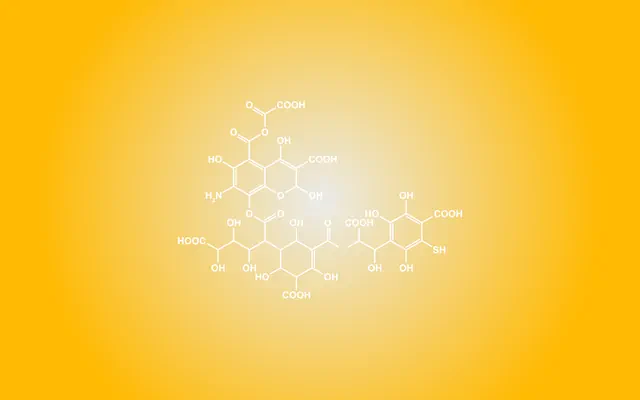
Minerals bound to fulvic acid are small, natural mineral complexes where fulvic acid acts as a transport vehicle. They are not put together in a factory afterward, but formed in cohesion. Fulvic acid is known for its extremely small molecular structure, which can be up to 10,000 times smaller than many other organic molecules, allowing it to carry and make minerals available in a different way.
That is exactly what makes the difference between a loose mineral mix and a mineral complex that is closer to nature.
A product can contain fulvic acid. And a product can contain minerals.
But that doesn't mean those minerals are naturally bonded to fulvic acid. That is the difference that is often missed.
With some products, individual minerals are selected and added to fulvic acid later. It looks good on the label. You see minerals. You see fulvic acid. So it feels natural.
But in reality, you are looking at a man-made product.
The minerals were added afterwards. They were not originally connected to the fulvic acid.
In a natural fulvic acid-mineral complex, minerals and fulvic acid occur together just as they do in the soil. Fulvic acid is formed from humus: organic plant material that is broken down by microorganisms over a long period of time. In that process, fulvic acid can bind to minerals and trace elements. This creates a natural complex in which minerals are carried by fulvic acid.
Not added later.
But naturally bonded.
And that is exactly what SMPL72 stands for.
Fulvic acid is often called a natural transport vehicle. But it must actually play that role. Not as an ingredient added to a formula later because it sounds good. Not as a marketing layer over a mineral mix. But as a natural carrier to which minerals are already bonded.
In healthy soil, fulvic acid helps to bind, carry, and make minerals available in an organic context. It is the link between soil, minerals, and plants.
That is why fulvic acid is so interesting in a mineral complex. Because it shows how minerals move naturally: in connection.
Many people look at the label and think: 'it's on there, so I'm getting it.'
But ingestion is not the same as absorption.
A mineral may be on the label, but that does not automatically mean your body can use it effectively.
Form matters.
Cohesion matters.
The carrier matters.
Minerals can be isolated, inorganic, or synthetically added. They can also occur in a natural context, bound to organic substances such as fulvic acid.
That is why a good mineral complex is not just about the question: how many minerals does it contain?
But primarily about: how are those minerals delivered?
Many mineral complexes come as a capsule or tablet. That’s fine, but minerals move through your body via fluids. Water plays a central role in transport, absorption, and distribution. That is why a liquid mineral complex makes sense.
You add it to water. This turns your daily glass of water into a simple mineral solution.
No large capsule.
No powder.
No sugary drink.
No complicated schedule.
Just water with a broad spectrum of minerals and trace elements, naturally bound to fulvic acid.
SMPL72 was developed for people who want to simplify their foundation.
No cupboard full of separate jars. No separate magnesium here, zinc there, selenium added, and electrolytes on the side. SMPL72 contains fulvic acid with more than 72 minerals and trace elements.
The most important difference: These minerals are naturally bound to fulvic acid.
They have not been added later by humans as a separate mineral mix. They occur in a natural synergy with fulvic acid: the natural transport medium from the soil.
Using SMPL72 in water is simple:
8 to 10 drops per day in a glass of water.
The water will turn a light yellow. The taste is subtly mineral and virtually neutral.
This makes a glass of water a simple daily foundation.
Not every mineral complex is the same.
Therefore, don't just look at how many minerals are listed on the label. Pay close attention to the form.
Ask yourself these questions:
* Are the minerals naturally bound to fulvic acid?
* Or are they synthetically composed minerals from a factory?
* Are the minerals small and highly bioavailable, or are they larger mineral forms with limited absorption?
* Were separate minerals added to fulvic acid later?
* Does it contain a broad spectrum of minerals and trace elements?
* Does it come from a pristine, untouched, and verifiable source?
* Is the origin of the source clear?
* Does it avoid sources like the sea, rivers, or surface nature reserves that are under pressure from modern pollution?
* Is it liquid and easy to add to water?
* Does it contain unnecessary sugars, colorings, or flavorings?
* Is it independently tested?
* Is it suitable for daily use?
For specific needs, an individual mineral can sometimes be useful. However, as a daily foundation, a broad mineral complex often makes more sense because minerals work together and influence one another.
Fulvic acid can bind to minerals and trace elements, acting as a natural transport mechanism. In SMPL72, the minerals are naturally bound to fulvic acid, rather than being added later as a separate mineral mix.
No. A mineral mix added to fulvic acid later is not the same as minerals that are naturally bound to fulvic acid. The difference lies in the natural cohesion and origin of the complex.
Trace elements are minerals that your body only needs in very small amounts, such as selenium, copper, chromium, manganese, and molybdenum. You don't need much of them, but that doesn't make them any less important.
Add 8 to 10 drops to a glass of water daily. This turns plain water into a simple mineral solution containing fulvic acid and over 72 minerals and trace elements.
A mineral complex sounds logical if you're finished with separate supplements. But the real difference isn't in how many minerals are listed on the label.
The difference is in the form.
Were the minerals added to fulvic acid later? Or are they naturally bound to fulvic acid?
SMPL72 chooses the latter: a liquid mineral complex with over 72 minerals and trace elements, naturally bound to fulvic acid.
Easy to add to water. Simple to use every day. No need for a cupboard full of separate supplements.
Try SMPL72 with the Starter Box.
With a 90-day money-back guarantee
Read more about adding minerals to water
Read more about how fulvic acid works
Everything you want to know about SMPL72, enrollment, and how it works. Still have questions? We've got the answers.
This varies from person to person and depends primarily on your starting point. Fulvic acid supports the absorption and bioavailability of the minerals you already get through your diet or supplements. The faster your body responds to that improved availability, the sooner you will notice a difference. People with low mineral levels or higher requirements often experience changes sooner than those who are already well-nourished. Some users notice more clarity or a calmer energy level within a few days, while for others, it happens more gradually over a period of weeks. In SMPL72, the fulvic acid is naturally bound to 72 different minerals and trace elements. The most important thing is consistency: fulvic acid doesn't act as a quick stimulant, but as a daily absorption mechanism that builds its effect step by step.
People often get some minerals from various sources, but usually not enough. Furthermore, they are often poorly absorbed by the digestive system. It is important to realize that most supplements are synthetic, and in the case of minerals, they are essentially just rock. These contain large molecules that your body can barely absorb, if at all. We have previously written a blog post about the ins and outs of supplementation; feel free to check out our blog section. You might already be taking magnesium or zinc, but keep in mind that you are only taking one or two of the 60 minerals your body needs every day. When you think in terms of a complementary approach, you cannot simply pick one mineral out of the entire spectrum.
Fulvic acid is not an energy booster, nor is it a substance that provides an immediate effect on fatigue or concentration. What it does is something more fundamental: it supports the way your body absorbs and utilizes minerals. And that very point—the utilization of minerals—plays a bigger role for many people than they realize. Fatigue, "brain fog," and concentration issues often have multiple causes, but in orthomolecular practice, it is frequently observed that mineral metabolism and electrolyte balance are significant factors. Minerals are necessary for processes such as: - signal transmission in the nervous system - energy production in the mitochondria - oxygen transport - fluid balance in and around the cell - enzyme activity involved in focus, alertness, and metabolism If those minerals are insufficiently available at the cellular level, the body cannot perform these processes efficiently. Fulvic acid cannot solve that on its own, but it makes minerals chemically smaller, more soluble, and more accessible to the body. As a result, the minerals you ingest through food or supplements can be better utilized where they are needed. Many users experience a more stable energy level, greater clarity, or fewer fluctuations throughout the day. Not because fulvic acid provides a direct stimulant, but because minerals are able to do their job better. This is a fundamentally different mechanism than that of caffeine, stimulants, or "energy boosters." It remains important to emphasize: fulvic acid is not a treatment for fatigue or concentration issues. It merely supports the biological foundation upon which energy, clarity, and nerve function operate. What an individual notices from it naturally also depends on diet, hydration, lifestyle, and individual needs.
Fulvic acid has a very mild, almost neutral taste. Most people barely notice it when they add a few drops to a glass of water. Some describe it as having a very light mineral flavor, but you usually only notice it if you are really paying attention. SMPL72 is pure fulvic acid with no additives, which keeps the taste soft, clean, and subtle. You don't need to worry about a bitter, sharp, or "muddy" taste, which is common in impure or thick humic products.Most users find that it simply tastes like water with a very faint hint of minerality. This makes it easy to use every day, even for children or people who are sensitive to strong flavors. It is best to take SMPL fulvic acid in a glass of chlorine-free water. Fruit juice is also an option, but avoid hot drinks. It is very easy to use.
Add 7-10 drops daily to a glass of (chlorine-free) water (fruit juice is also an option, but avoid hot drinks). For children: 1 drop per 10 kg of body weight. Feel free to increase the dose during illness or intense physical exertion. For maximum absorption: take 30 minutes before a meal. For an energetic start to the day: take in the morning on an empty stomach. For recovery: take immediately after sports or physical exertion. SMPL72 is a powerful detox, so be sure to drink plenty of water. If you are pregnant or taking medication, build up the dose gradually and monitor how your body reacts. When in doubt, consult your doctor or midwife.


