Fulvic acid
Buying fulvic acid. What to look out for.
Buying fulvic acid? Discover what to look for regarding source, concentration, extraction method, and certification, so you can better understand what makes a high-quality fulvic acid.
Buying fulvic acid? Discover what to look for regarding source, concentration, extraction method, and certification, so you can better understand what makes a high-quality fulvic acid.
Buying fulvic acid seems simple. On Bol.com, at Holland & Barrett, Kruidvat, and dozens of webshops, you will find supplements that all promise the "highest quality." Yet, that doesn't mean much.
Fulvic acid is not a standard product. The source, concentration, measurement method, extraction method, and independent certification together determine whether you are buying a carefully produced supplement or mostly diluted water with a good story.
In this article, you will read what to look for before you buy fulvic acid.
You cannot identify good fulvic acid by a single claim on a package. Quality is determined by a combination of several factors.
The most important ones are:
We will go through these points step by step below.
Fulvic acid is formed from plant material that has been broken down by microorganisms in the soil over a very long period. The quality is strongly linked to the origin of the material.
Not every humus layer is the same. The age, composition, and purity of the source help determine the mineral profile and the quality of the final product.
What you want is a source that is untouched and located far away from pollution, pesticide use, and industrial activity. This is because fulvic acid binds easily to other substances. That is exactly why the purity of the source is so important.
Be cautious with products that say nothing about the origin of their source. If a supplier cannot explain where the fulvic acid comes from, that is a reason to look elsewhere.
An exotic story is not proof of quality. Some suppliers refer to remote nature reserves in South America or the depths of the sea or a river. That sounds pure, but even remote places exist in a world where soil, water, and air have been affected by modern pollution in many areas. With fulvic acid, therefore, it is not how nice the origin story sounds that counts, but whether the source is untouched by modern life, verifiable, deep-seated, and independently tested.
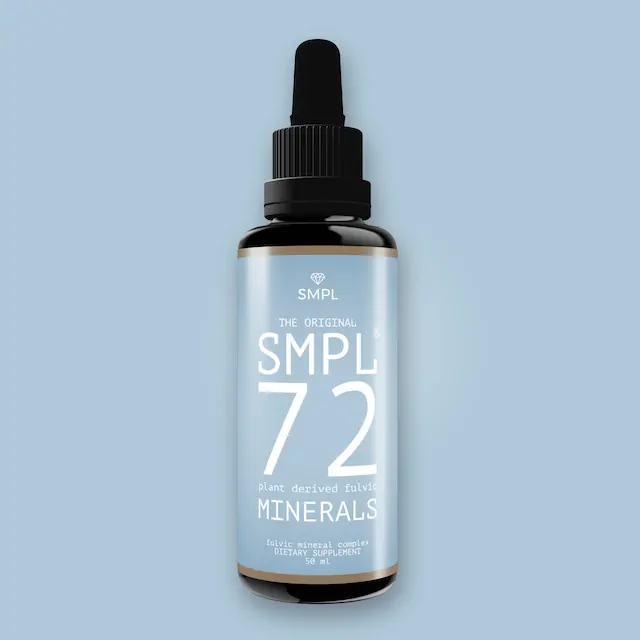
SMPL72 is extracted from humus layers over thirty million years old. The source is located deep in the ground and has remained untouched for a long time, far away from direct sources of pollution. The natural complexity of this material is so great that it cannot be synthetically imitated or replicated.
Fulvic acid is water-soluble. This makes it easy to dilute, often without the consumer noticing.
That makes the concentration important.
Percentages on the market vary widely. Many products contain relatively low concentrations, while the packaging focuses primarily on general quality claims.
What to look for:
A percentage means little if you don't know how it was determined. Some measurement methods do not specifically measure fulvic acid, but also include other humic substances, organic acids, or mineral components in the result. As a result, a percentage can appear higher than it actually is.
We are sometimes asked: "But doesn't product X have a higher fulvic acid percentage?" That may seem convincing at first glance, but a higher percentage does not automatically mean a better product.
The most important thing is not just how much fulvic acid is claimed, but primarily how that percentage was measured.
Some suppliers use general measurement methods that are not specific enough for fulvic acid.
As a result, other humic substances, organic acids, or mineral components may also be included in the count.
Some high percentages are the result of methods like titration or gravimetric analysis.
While these methods can be useful in soil research or for measuring broader humic fractions, they are less suitable when you specifically want to know how much fulvic acid is in a supplement.
The problem is that such methods do not always make a sharp distinction between fulvic acid, humic acids, other organic acids, and mineral components.
Consequently, a product might claim 40%, 60%, or even more fulvic acid on paper, while a more specific analysis would show a much lower percentage.
The result is a percentage that sounds impressive, but does not necessarily reflect how much fulvic acid is actually present in the product.
That is why SMPL72 does not look at the highest number on paper, but at a reliably measured percentage. SMPL72 contains 12 to 18% fulvic acid, independently tested using the LAMAR method. This method was specifically developed to isolate and measure fulvic acid more precisely, rather than including broader groups of humic substances.
Some fulvic acid products also refer to a high BOVIS value. While this may be used within certain holistic measurement frameworks, it is not a generally accepted scientific standard for product quality. Therefore, do not look only at a BOVIS value, but primarily at verifiable data such as source, measurement method, lab tests, purity, and certification.
A product with a claimed percentage of 40%, 60%, or even higher may therefore have been measured less specifically than a product with a lower, but more accurately determined percentage. With fulvic acid, the rule is: the measurement method determines the value of the percentage.
With fulvic acid, a percentage only means something if you know how it was measured. That is exactly where things often go wrong.
Fulvic acid belongs to the group of humic substances. This group also includes humic acids and other organic compounds. These substances are partly similar, but they are not the same.
Less specific measurement methods can measure multiple substances together and present the result as “fulvic acid.” Other organic acids or mineral components can also influence the outcome. As a result, a product may show a high percentage on paper, while the actual fulvic acid content is much lower.
The LAMAR method was developed to look more specifically at the fulvic acid fraction. In this process, the sample is first treated to separate larger humic acid molecules from the smaller fulvic acid fraction. Subsequently, it is measured more specifically which part is actually classified as fulvic acid.
As a result, the LAMAR method usually provides a more realistic picture than general measurement methods. A product that claims a very high percentage using a general method may turn out to be significantly lower when measured with the more specific LAMAR method.
A lower percentage based on LAMAR can therefore be more valuable than a much higher percentage determined using a less specific method.
SMPL72 is independently tested using the LAMAR method and contains 12 to 18% fulvic acid. That percentage was not chosen because it sounds the highest, but because it is verifiable, traceable, and specifically measured.
Fulvic acid is fragile. Heat, high pressure, and chemical extraction can affect the composition of the final product.
Some producers opt for accelerated extraction methods because they are cheaper and faster. But speed is not always an advantage when working with natural, fragile material.
What you want is an extraction method without aggressive chemicals, without heat, and without high pressure.
SMPL72 is extracted exclusively using pure water. The extraction process takes two years. Not because it is the fastest method, but because it helps to preserve the material as carefully as possible.
Claims are easily made. Independent verification is more valuable.
When you buy fulvic acid, you want to be able to see if a product has been tested and verified by third parties. That says more than general terms like “premium,” “pure,” or “highest quality.”
Look for certifications and checks such as:
SMPL72 is GMP-certified by an independent auditing body and also holds certifications such as Halal, Kosher, Vegan, GMO-free, and is FDA approved.
These certifications attest to quality, production, and oversight, but they do not replace medical advice.
An article about fulvic acid should also address potential side effects, drawbacks, and points of consideration.
Fulvic acid is a supplement, not a medicine. Even so, everyone may experience supplements differently. Some users report mild reactions at the start, such as increased urination, temporary fatigue, or changes in digestion. Not everyone experiences this. If you are sensitive to supplements, you can build up your usage gradually.
Are you pregnant, breastfeeding, or do you have a medical condition? Please consult a doctor or pharmacist before using fulvic acid.
Furthermore, fulvic acid is not a fast-acting supplement. User experiences vary. Many people only notice the effects after several weeks of daily use. Read about the experiences with fulvic acid SMPL72.
Don't just compare the percentage on the label; look at what lies behind it: the source, the measurement method, the extraction process, and independent verification.
SMPL72 was developed for people who want to know exactly what they are buying. No inflated percentages, just a verifiable product with 12 to 18% fulvic acid, independently measured using the LAMAR method.
Order SMPL72 fulvic acid via the official webshop.
Before you buy, check the following:
— Is the source of origin stated and verifiable?
— Has the fulvic acid percentage been independently measured?
— What measurement method was used? (LAMAR is the standard)
— Is the product GMP-certified by an independent party?
— Is the extraction method chemical-free?
— Is there a money-back guarantee?
If a supplier cannot answer several of these questions, buy elsewhere.
Related blogs:
→ What is fulvic acid and why do you need it?
→ SMPL72 fulvic acid reviews
Done searching? Order SMPL72
Everything you want to know about SMPL72, enrollment, and how it works. Still have questions? We've got the answers.
This varies from person to person and depends primarily on your starting point. Fulvic acid supports the absorption and bioavailability of the minerals you already get through your diet or supplements. The faster your body responds to that improved availability, the sooner you will notice a difference. People with low mineral levels or higher requirements often experience changes sooner than those who are already well-nourished. Some users notice more clarity or a calmer energy level within a few days, while for others, it happens more gradually over a period of weeks. In SMPL72, the fulvic acid is naturally bound to 72 different minerals and trace elements. The most important thing is consistency: fulvic acid doesn't act as a quick stimulant, but as a daily absorption mechanism that builds its effect step by step.
People often get some minerals from various sources, but usually not enough. Furthermore, they are often poorly absorbed by the digestive system. It is important to realize that most supplements are synthetic, and in the case of minerals, they are essentially just rock. These contain large molecules that your body can barely absorb, if at all. We have previously written a blog post about the ins and outs of supplementation; feel free to check out our blog section. You might already be taking magnesium or zinc, but keep in mind that you are only taking one or two of the 60 minerals your body needs every day. When you think in terms of a complementary approach, you cannot simply pick one mineral out of the entire spectrum.
Fulvic acid is not an energy booster, nor is it a substance that provides an immediate effect on fatigue or concentration. What it does is something more fundamental: it supports the way your body absorbs and utilizes minerals. And that very point—the utilization of minerals—plays a bigger role for many people than they realize. Fatigue, "brain fog," and concentration issues often have multiple causes, but in orthomolecular practice, it is frequently observed that mineral metabolism and electrolyte balance are significant factors. Minerals are necessary for processes such as: - signal transmission in the nervous system - energy production in the mitochondria - oxygen transport - fluid balance in and around the cell - enzyme activity involved in focus, alertness, and metabolism If those minerals are insufficiently available at the cellular level, the body cannot perform these processes efficiently. Fulvic acid cannot solve that on its own, but it makes minerals chemically smaller, more soluble, and more accessible to the body. As a result, the minerals you ingest through food or supplements can be better utilized where they are needed. Many users experience a more stable energy level, greater clarity, or fewer fluctuations throughout the day. Not because fulvic acid provides a direct stimulant, but because minerals are able to do their job better. This is a fundamentally different mechanism than that of caffeine, stimulants, or "energy boosters." It remains important to emphasize: fulvic acid is not a treatment for fatigue or concentration issues. It merely supports the biological foundation upon which energy, clarity, and nerve function operate. What an individual notices from it naturally also depends on diet, hydration, lifestyle, and individual needs.
Fulvic acid has a very mild, almost neutral taste. Most people barely notice it when they add a few drops to a glass of water. Some describe it as having a very light mineral flavor, but you usually only notice it if you are really paying attention. SMPL72 is pure fulvic acid with no additives, which keeps the taste soft, clean, and subtle. You don't need to worry about a bitter, sharp, or "muddy" taste, which is common in impure or thick humic products.Most users find that it simply tastes like water with a very faint hint of minerality. This makes it easy to use every day, even for children or people who are sensitive to strong flavors. It is best to take SMPL fulvic acid in a glass of chlorine-free water. Fruit juice is also an option, but avoid hot drinks. It is very easy to use.
Add 7-10 drops daily to a glass of (chlorine-free) water (fruit juice is also an option, but avoid hot drinks). For children: 1 drop per 10 kg of body weight. Feel free to increase the dose during illness or intense physical exertion. For maximum absorption: take 30 minutes before a meal. For an energetic start to the day: take in the morning on an empty stomach. For recovery: take immediately after sports or physical exertion. SMPL72 is a powerful detox, so be sure to drink plenty of water. If you are pregnant or taking medication, build up the dose gradually and monitor how your body reacts. When in doubt, consult your doctor or midwife.


